
Best Flooring for Large Dogs: A Real Comparison of Scratch, Water & Wear Resistance
If you have a large dog — or three — your floors take a beating most homeowners never imagine. This guide compares the flooring types that actually hold up to big-dog claws, accidents, and water-bowl disasters, with real numbers on wear layer thickness, scratch resistance, waterproofing, and maintenance.
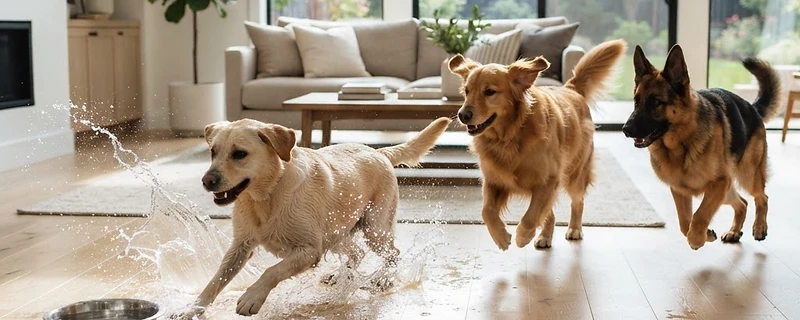
If you share your home with a large dog — a Lab, a Shepherd, a Golden, a Pitbull, a Great Dane — you already know that "durable flooring" means something very different to you than it does to the average homeowner. A 75-pound dog running to greet you at the door generates more concentrated force on a floor than a recliner. Their claws can leave marks that never buff out. And the water bowl? That's a splash zone, not a fixture.
This guide is for the dog household. We're not going to tell you "we sell quality flooring." We're going to compare the flooring types that real dog owners choose — by scratch resistance, wear layer, waterproofing, texture and grip, and maintenance — so you can pick the one that survives your dog, not just looks good in a showroom.
The Five Things That Actually Matter for Large Dogs
Before comparing materials, here's what a big-dog floor has to survive:
- Scratch resistance — Large-dog claws concentrate a dog's full weight into a tiny point. A 90-pound dog standing still puts roughly 200+ psi under each claw; running and turning multiplies that. The floor's surface hardness determines whether those claws leave permanent marks.
- Wear layer thickness — For vinyl and laminate, the wear layer is the transparent protective film on top. Measured in mils (1 mil = 1/1000 inch), it's the single best predictor of how long the floor resists scratches. For large dogs, anything under 12 mil is a gamble; 20 mil and up is the dog-owner sweet spot.
- Waterproofing — Accidents happen. Water bowls get knocked over. A dog comes in from the rain and shakes. A floor that absorbs moisture at the seams or edges will warp, swell, or grow mold — and trap the smell of every accident forever.
- Texture and grip — A floor that's too smooth is a skating rink for a running dog. Older dogs and large breeds can injure hips and knees sliding on glossy surfaces. A slightly textured surface gives them traction and protects their joints.
- Maintenance — Pet hair, dander, tracked-in mud, drool, and the occasional stomach upset. A floor that's easy to sweep and damp-mop — without special cleaners or refinishing — keeps your home sanitary and your sanity intact.
How the Main Flooring Types Compare for Large Dogs
Here's an honest, side-by-side comparison. Ratings are for a large, active dog (50–100 lbs), not a toy breed.
| Flooring Type | Scratch Resistance | Waterproof? | Grip / Safety | Maintenance | Verdict for Large Dogs |
|---|---|---|---|---|---|
| LVP / SPC (Luxury Vinyl Plank) | Excellent (with 20+ mil wear layer) | 100% waterproof, seams included | Good — textured surface gives traction | Easy sweep + damp mop | Best overall |
| Porcelain / Ceramic Tile | Excellent — claws can't scratch it | Waterproof | Poor — slick and hard on joints; rugs needed | Easy, but grout needs sealing | Best for durability, tough on old dogs |
| Laminate (AC4+) | Very good scratch resistance | Not waterproof — seams swell | Moderate | Easy sweep, but liquids must be wiped fast | Good if accidents are rare |
| Engineered Hardwood | Poor to moderate — claws show scratches | Not waterproof | Moderate | Needs refinishing; sensitive to water | Beautiful, but risky with big dogs |
| Solid Hardwood | Poor — soft woods dent and scratch deeply | Not waterproof | Moderate | Can be refinished, but expensive | Avoid for active large dogs |
| Sheet Vinyl | Moderate — thinner wear layer | Waterproof (fewer seams) | Good | Easy | Budget option, but claws can gouge |
| Carpet | N/A (claws don't scratch, but snag) | Not waterproof — absorbs accidents | Excellent grip | Hardest to clean; traps hair & odors | Avoid in dog zones |
The Winner: Luxury Vinyl Plank (LVP) — If You Pick the Right One
For most large-dog households, LVP — specifically SPC (Stone Polymer Composite) core vinyl — is the best balance of durability, waterproofing, comfort, and maintenance. But not all LVP is created equal. Here's what to look for:
Wear Layer: 20 mil minimum, 30 mil ideal
The wear layer is your dog's claw shield. Entry-level LVP has a 6–8 mil wear layer — fine for a quiet apartment, not for a running Lab. For large dogs, insist on 20 mil or thicker. Premium lines offer 30+ mil, which can take years of claw traffic without showing it.
SPC core over WPC
SPC (stone-polymer composite) is denser and more dent-resistant than WPC (wood-polymer composite). A large dog's weight is concentrated on four paws; a denser core means fewer pressure dents and a more stable floor over time.
Textured, matte surface
A smooth, glossy LVP looks great in a showroom and turns your hallway into an ice rink. A registered-embossed (EIR) matte texture gives your dog traction, hides minor scratches, and looks more like real wood. It's the single feature most dog owners wish they'd known about before buying.
Attached acoustic underlayment
Beyond comfort underfoot, an attached pad absorbs impact and reduces the "click-click-click" of claws on a hard surface — a real quality-of-life upgrade in a dog home.
Truly waterproof seams
Look for products marketed as 100% waterproof with tight click-lock seams. Spilled water bowls and accidents should sit on the surface for hours without warping the floor. (Still clean it up — but you won't panic.)
The Runner-Up: Porcelain Tile
If your priority is indestructibility over comfort, porcelain tile wins. A large dog cannot scratch porcelain. It's fully waterproof, immune to accidents, and will outlast the dog, the next dog, and probably the house.
The trade-offs are real, though:
- It's hard and cold. Large breeds, especially seniors, can develop calluses and joint soreness from sleeping on tile. Area rugs or dog beds are essential.
- It's slick. A running dog can slide and injure a hip or cruciate ligament. Textured tile or strategically placed rugs reduce the risk.
- Grout is the weak point. Seal the grout, or urine and mud will stain it. Epoxy grout costs more but is nearly impervious.
Tile is best in mudrooms, kitchens, and entryways — the high-traffic, high-mess zones — paired with a softer floor in the living areas.
What to Avoid with Large Dogs
- Solid and engineered hardwood in active areas. Even hard species like hickory will show claw scratches over time, and no hardwood is waterproof. One unattended water-bowl spill at a seam can lift the finish. If you love wood, reserve it for low-traffic rooms the dog doesn't race through.
- Laminate in kitchens and near water bowls. Laminate's surface is scratch-resistant, but its fiberboard core swells permanently if water gets in a seam. A knocked-over water bowl is a common laminate killer.
- Carpet in dog zones. It's comfortable and grippy, but it absorbs urine, traps hair, holds odor, and snags claws. Save carpet for bedrooms the dog naps in, not the rooms it lives in.
- Low-wear-layer vinyl. A 6-mil LVP will look scratched and dull within a year of big-dog traffic. The savings up front aren't worth it.
A Quick Decision Guide
- You want one floor for the whole house and you have an active large dog: 20+ mil SPC LVP with a matte, textured surface.
- You want maximum durability and don't mind rugs: Porcelain tile in the main areas, LVP in the bedrooms.
- You have an older dog with hip issues: Avoid tile and glossy surfaces. Textured LVP gives the best grip.
- You're on a budget but need waterproof: Sheet vinyl (fewer seams than LVP) or a value-tier SPC LVP with at least a 12 mil wear layer.
- You love hardwood and have one calm, older dog: Engineered hardwood with a hard species and a durable finish — but know it will show wear, and keep water bowls on a mat.
Frequently Asked Questions
Will my large dog's claws scratch luxury vinyl plank? A quality LVP with a 20+ mil wear layer resists claw scratching very well in normal household conditions. Deep gouges can happen if a dog digs in or drags something, but day-to-day claw traffic won't leave visible marks the way it does on hardwood.
Is LVP really waterproof enough for dog accidents? Yes — SPC-core LVP is waterproof through the plank, and quality click-lock seams keep surface water out for hours. Clean accidents promptly, but you won't face warping or permanent odor the way you would with laminate or hardwood.
What's the best floor for an older large dog? A textured, matte LVP with an attached underlayment. It gives traction (protecting hips and knees), is softer underfoot than tile, and is still waterproof and scratch-resistant. Add area rugs at transitions for extra grip.
Does tile hurt big dogs' joints? Hard tile can contribute to calluses and soreness over time, especially for senior dogs that sleep on the floor. Provide a thick dog bed and consider area rugs in resting spots. The traction issue is separate — a running dog can slip on polished tile.
How thick should the wear layer be for a big dog? Minimum 12 mil for a calm, single-dog home; 20 mil or thicker for active or multiple large dogs. The wear layer is the protective film that takes the claw abuse — it's the most important spec on a vinyl floor for a dog household.
Can I put hardwood in a home with large dogs? You can, but expect scratches. Hard species (hickory, maple, oak) and a tough finish (aluminum oxide) hold up best, but no wood is scratch-proof or waterproof. Many dog owners choose hardwood in formal rooms and LVP in the dog's everyday paths.
Choosing flooring for a large dog isn't about finding the hardest surface — it's about balancing scratch resistance, waterproofing, grip, and the life you actually live with your dog. If you're in North Georgia and want to see and feel the difference between a 12-mil and a 30-mil wear layer, we'll bring the samples to your home so your dog can "test" them too.
Krystal Wilbanks
Owner · 9 years of experience
Krystal Wilbanks is the owner of By Design Floors with nine years of hands-on flooring installation experience across North Georgia. She works directly with homeowners on product selection, subfloor preparation, and project scoping so every estimate reflects real installed conditions — not just shelf prices.